Solutions
Four AI-native products, built in-house and proven in Korea's public sector.
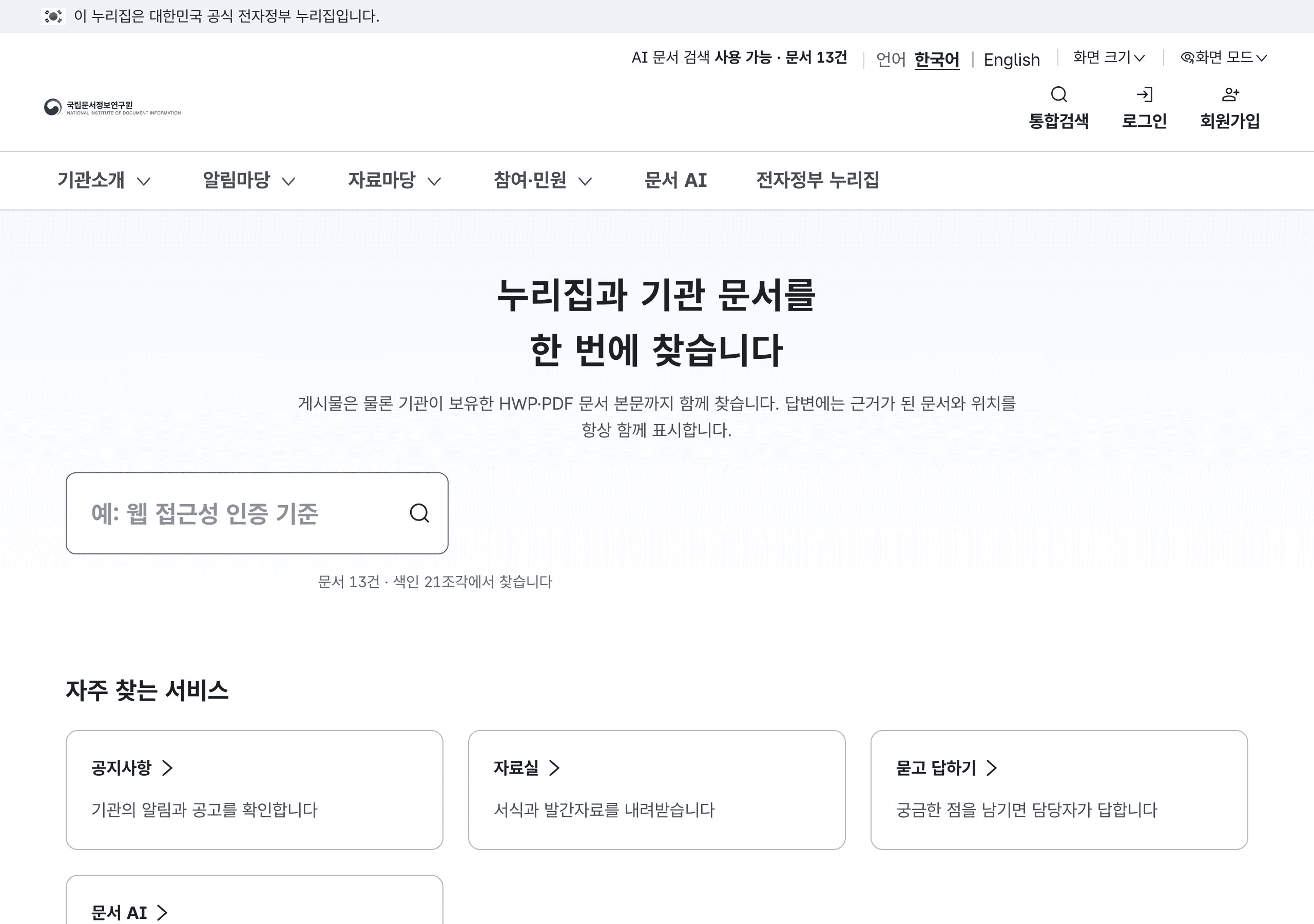
MORU
A citizen-facing portal and back office built on the Korean eGovFrame 5.0 and the KRDS design system. Accounts and roles, boards, secure attachments, a standard glossary, audit logs and batch jobs come ready-made, with seven business packs on top.
LLM drafts the answer → Source shown · staff confirms
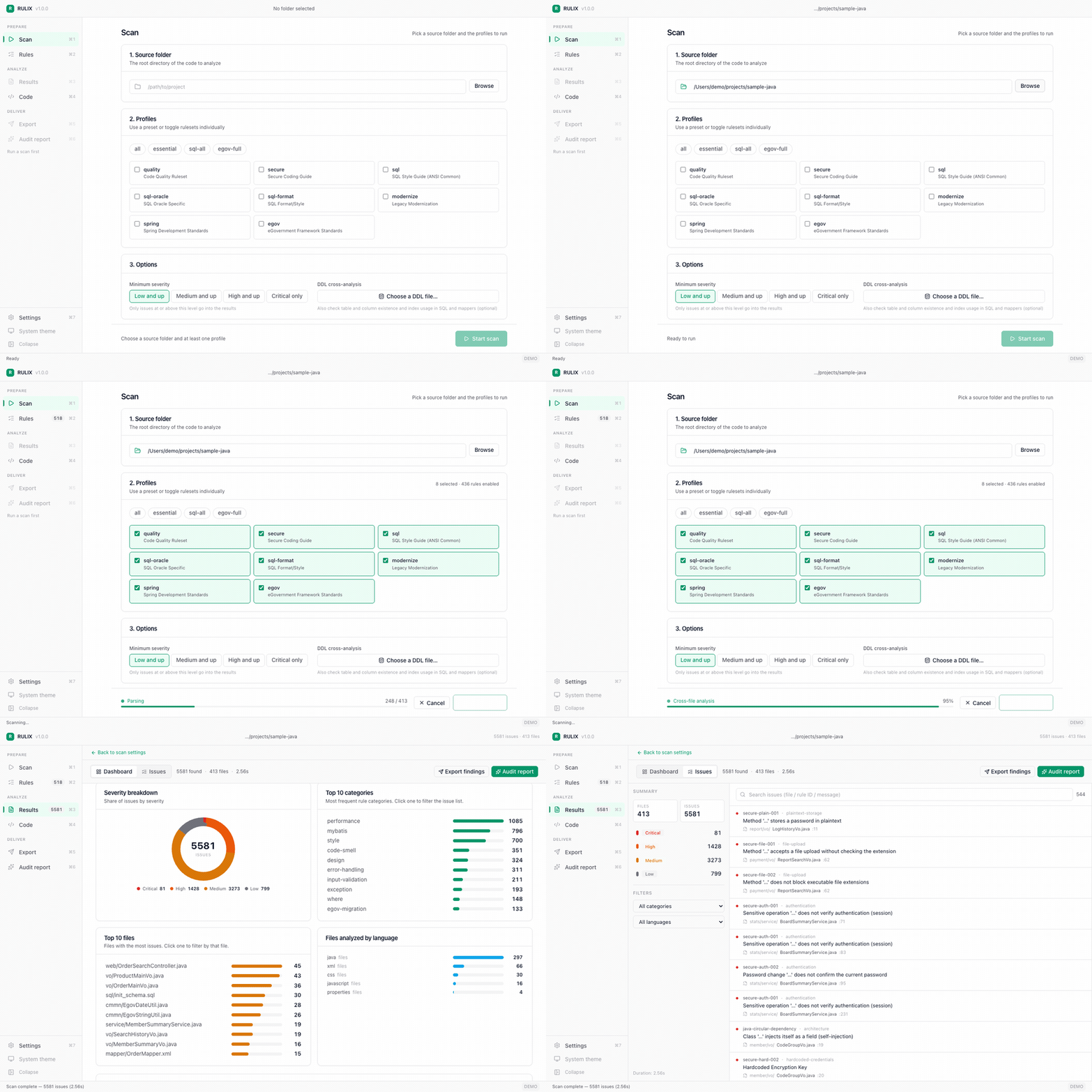
RULIX
Finds quality defects and secure-coding weaknesses across Java, JavaScript, SQL and XML with 535 rules. A single Go binary, so it runs inside air-gapped development networks with nothing to install.
AI interprets & prioritizes → Report · developer fixes
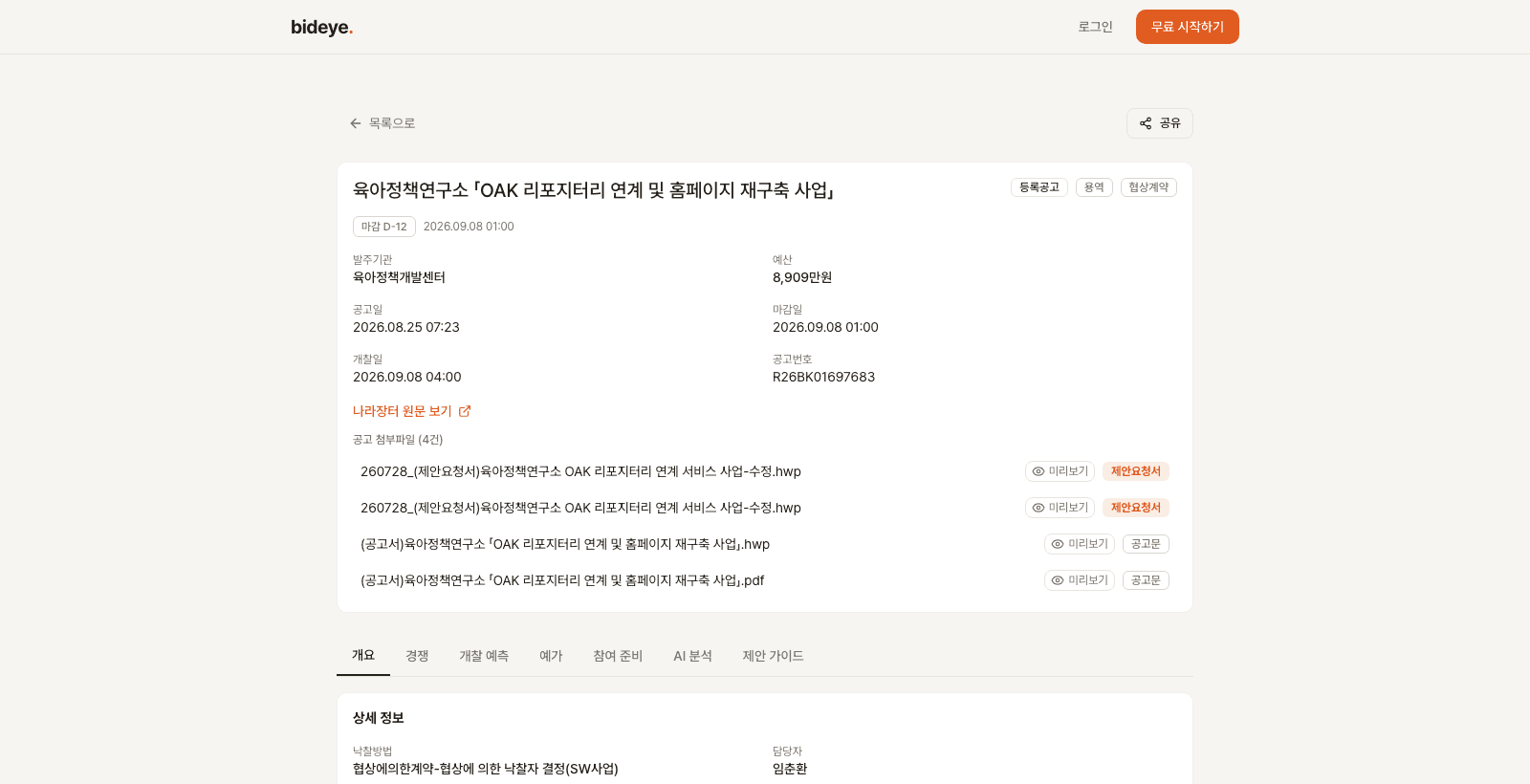
BidEye
Collects and classifies tenders from Korea's public procurement portal, matches them against a company's licenses and qualifications, and scores how well each one fits. Hours of screening hundreds of notices become minutes.
LLM summary · qualification match → Fit grade · staff decides
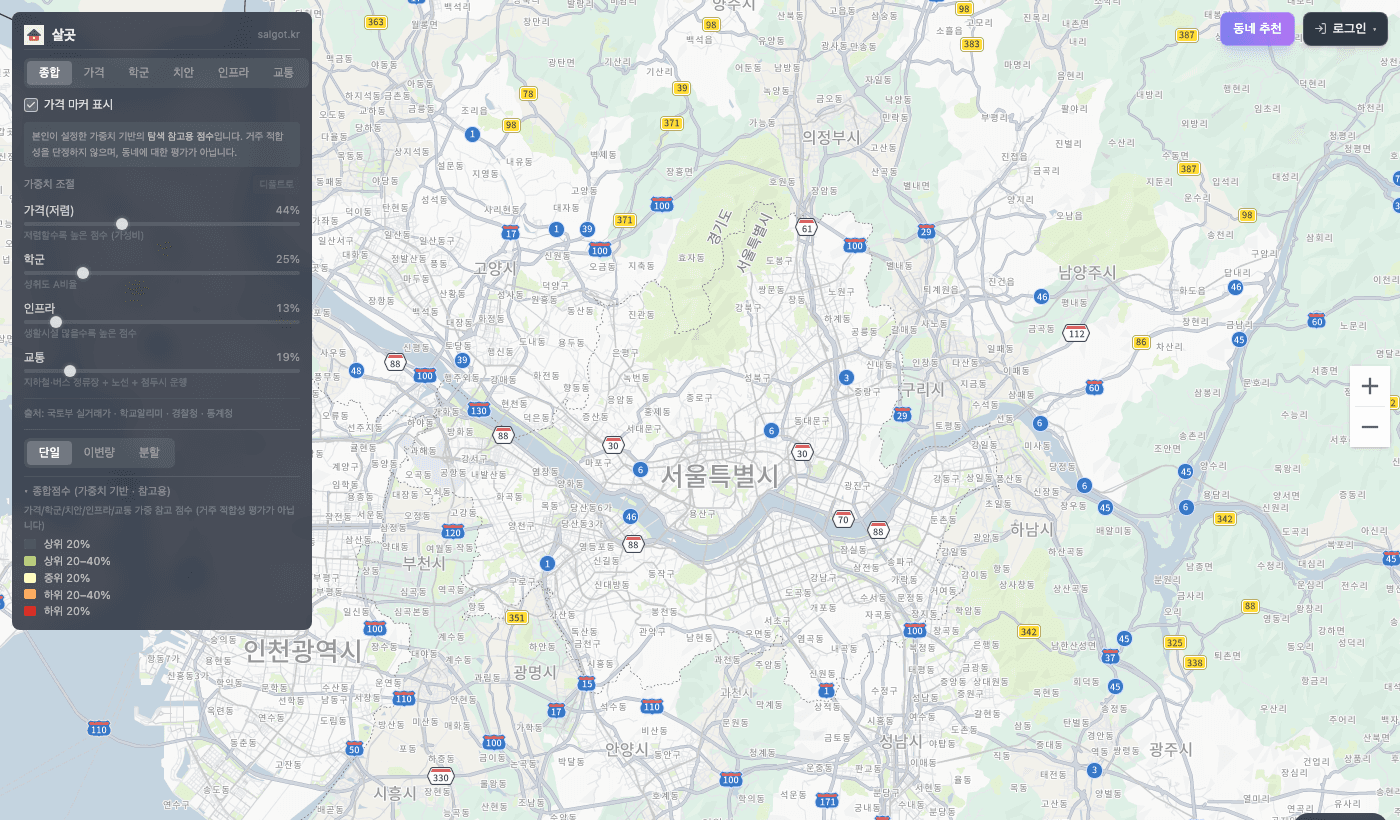
Salgot
Layers transaction prices, school data, crime statistics and population onto one map, then recommends the neighborhoods that best match a plain-language request, with the evidence attached. 26 regions covered.
AI converts to weights → Evidence-backed picks · user compares
The screens above are our own assets that we develop and operate ourselves, not contract deliverables.
AI INSIDE
AI is the core engine of all four products
AI detects and judges; people approve. Repetitive cognitive work goes to the model, and responsibility for the decision stays with a person. We deploy with external APIs or on-premises models, whichever the site requires.
Public tender analysis
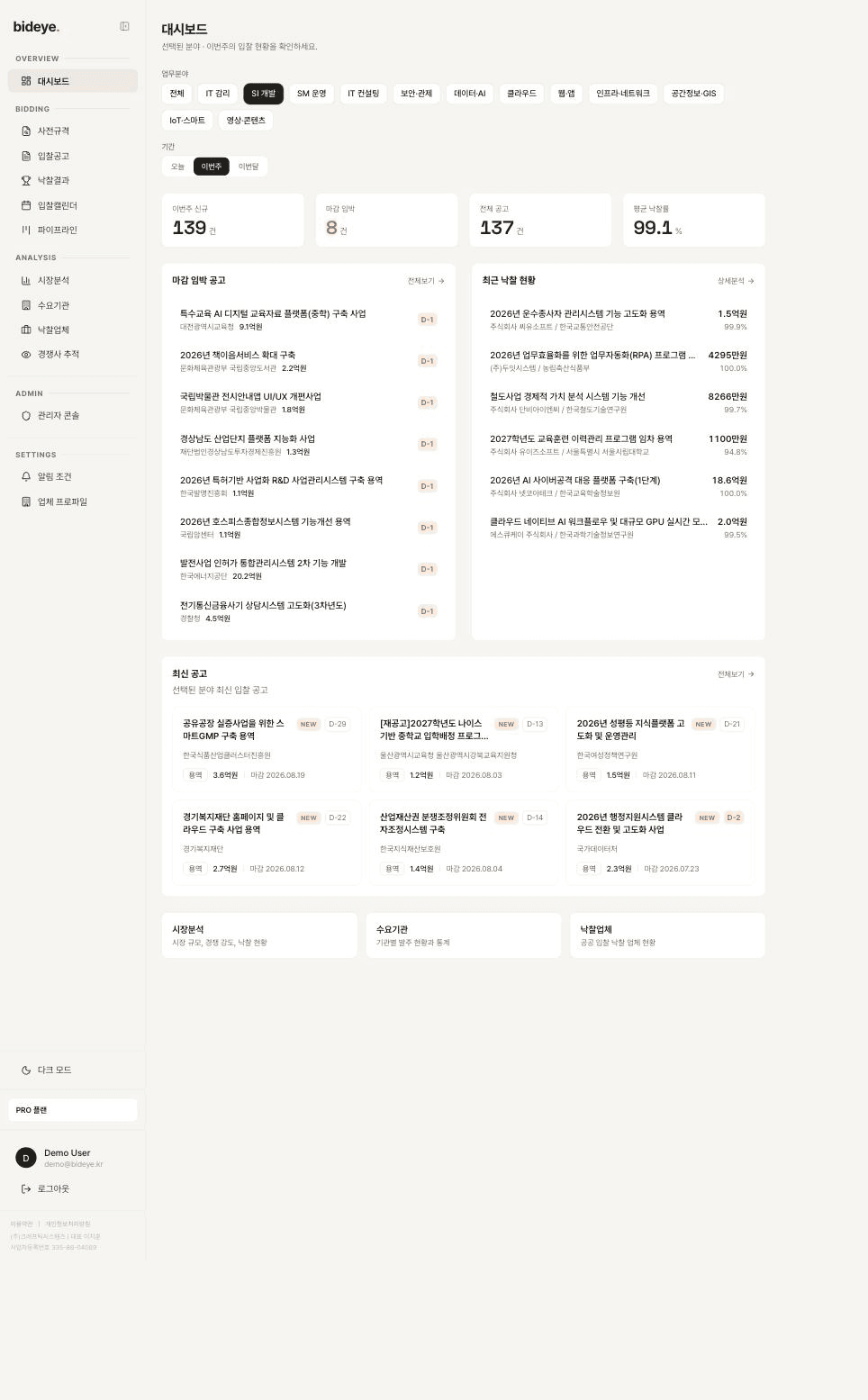
Reads each tender and decides whether you can bid
An LLM summarizes and structures every collected notice, compares it with the registered company profile, and assigns a fit score and grade. AI screens the daily inflow first; people review only what it recommends.
- 1Collect & classify tenders
- 2LLM summary · qualification matchAI
- 3Fit grade · staff decidesHuman
Location analytics on open data
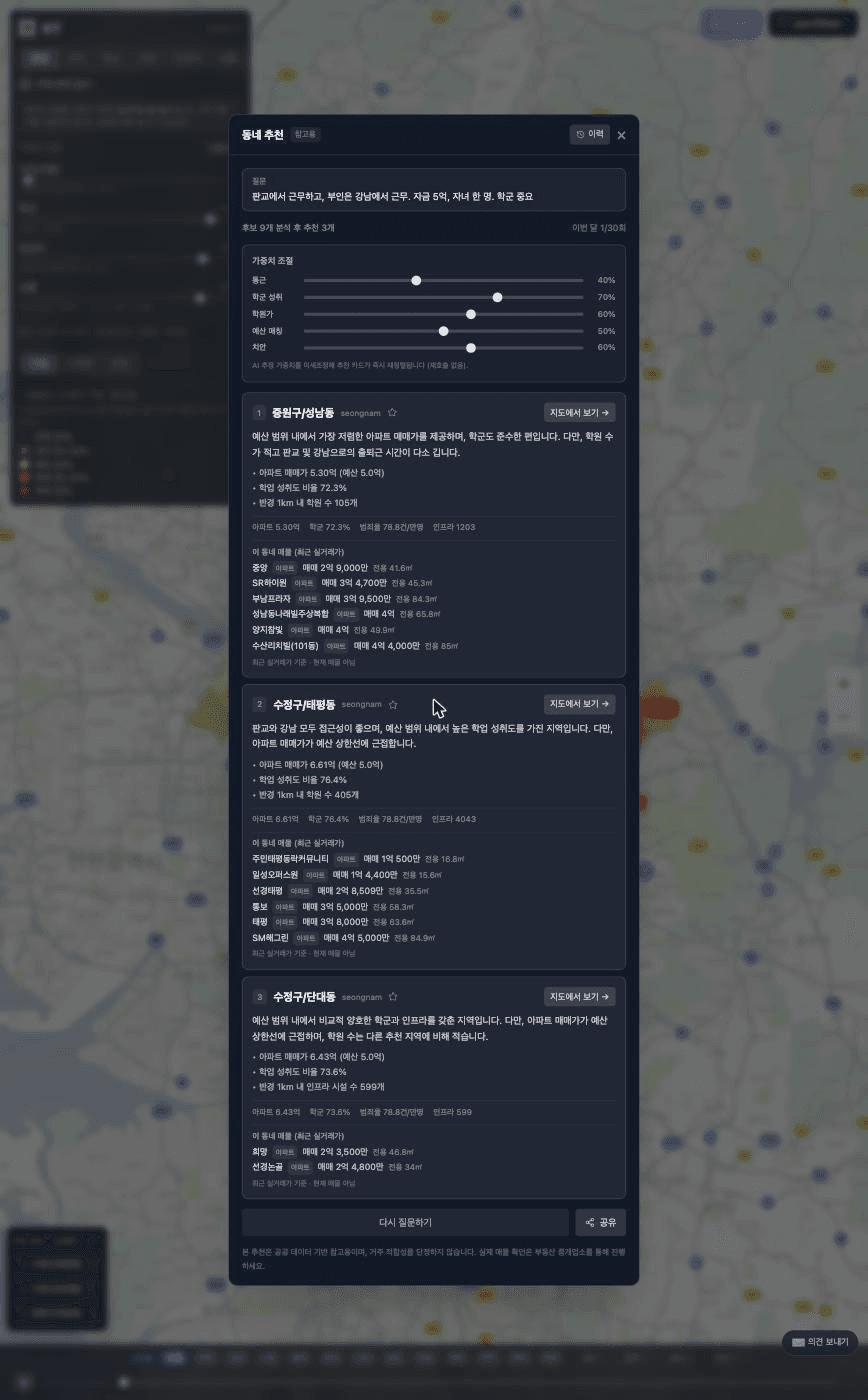
Turns one sentence into weights and recommends a neighborhood
AI converts a request like “near an elementary school and quiet” into multi-criteria weights, scores them against open-data indicators, and presents candidate districts with the supporting evidence. The final pick is made by the user, comparing on the map.
- 1Plain-language request
- 2AI converts to weightsAI
- 3Evidence-backed picks · user comparesHuman
Government portal & admin platform
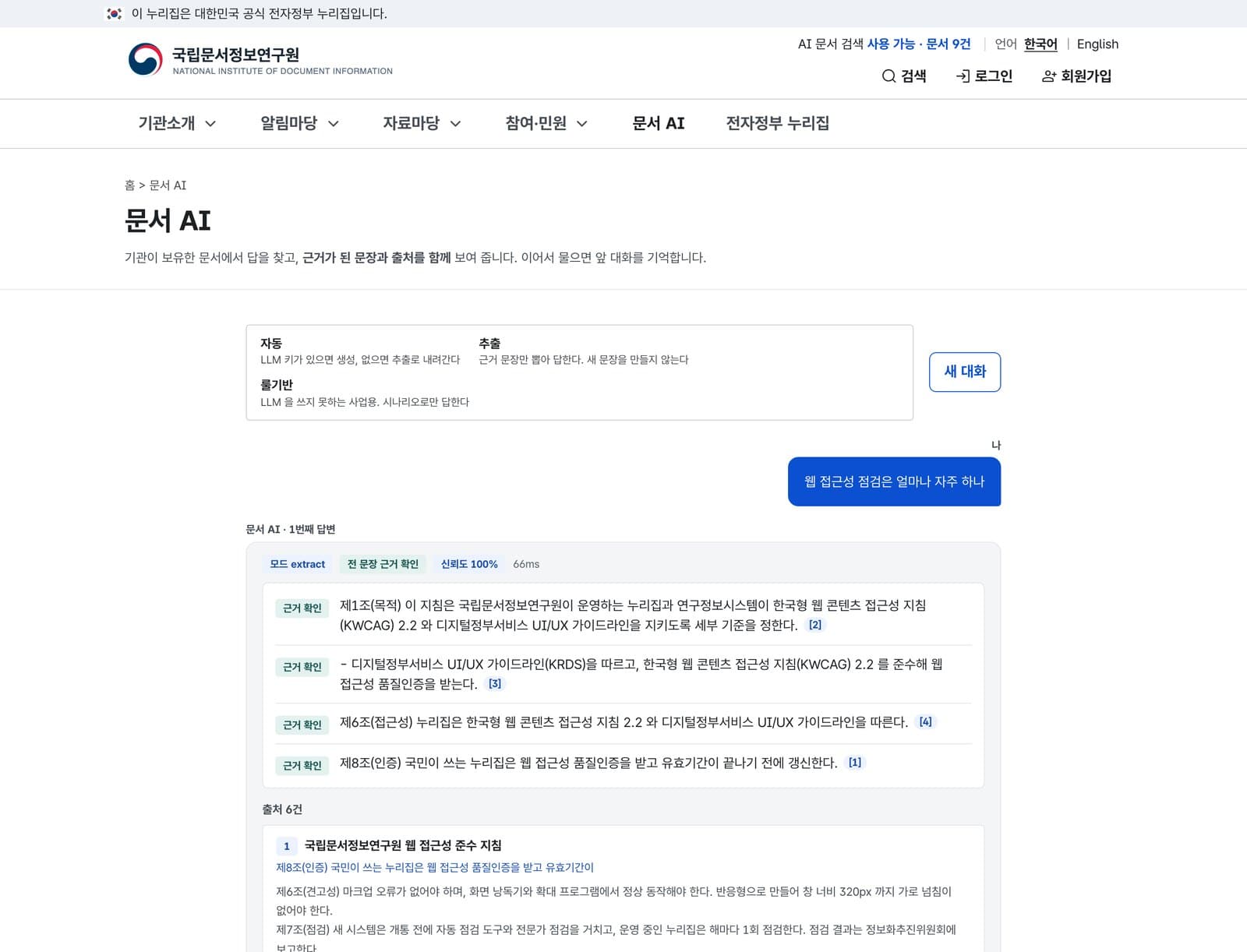
Answers about official documents, with the source shown
It indexes an agency's notices, guidelines and circulars, then answers questions while pointing to the original passage. Switch the document-AI module off and the platform still runs on its own, so the same product fits sites where AI is not yet allowed.
- 1Index & search documents
- 2LLM drafts the answerAI
- 3Source shown · staff confirmsHuman
Static analysis for code quality & security
Turns a list of findings into a diagnostic report
AI reads what the analyzer found, ranks it, and writes a report with priorities and how to fix each issue. Through MCP it plugs into AI agents so developers can call it from their own tools. In 2027 it grows into an AI code-diagnosis and consulting service.
- 1535-rule static analysis
- 2AI interprets & prioritizesAI
- 3Report · developer fixesHuman

More
More from Craftic
Beyond the four core solutions: a research platform, a consumer app and two macOS utilities for Korean filenames, all built by the same team.
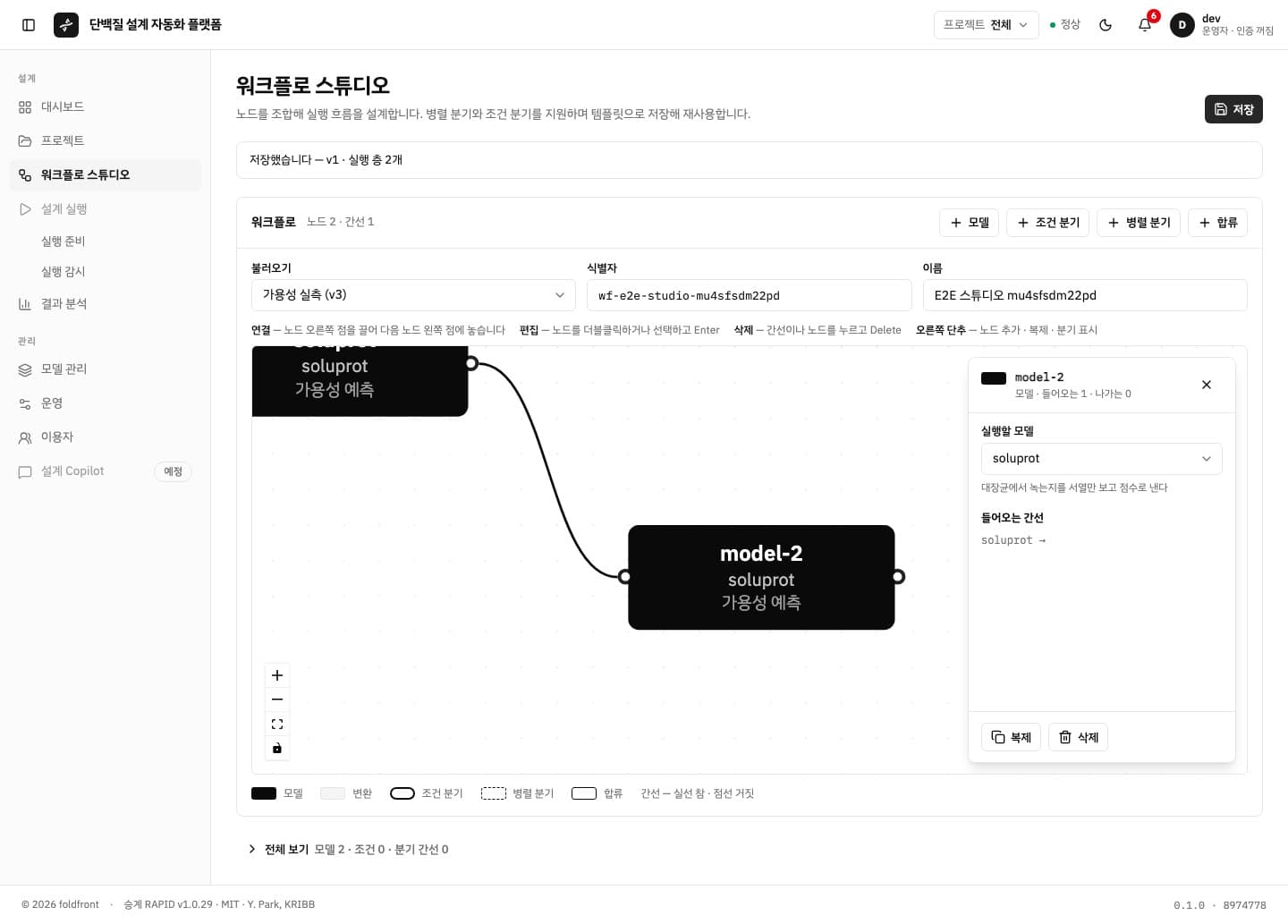
Composes protein-design models into free-form DAG workflows and runs, compares and versions them from the screen, not from code. Parallel and conditional branches, reusable templates, graph checks at save time, a model registry, and run-by-run comparison with audit records. Succeeds RAPID v1.0.29 (MIT · Y. Park, KRIBB) and keeps its domain logic intact.

A manual, DSLR-style camera for iPhone and Android: exposure lock, white balance, full manual controls, filters, a detail view and a built-in editor. No servers, no accounts, and it collects no data. Six months of every Pro feature free after install, then a subscription or a lifetime license.
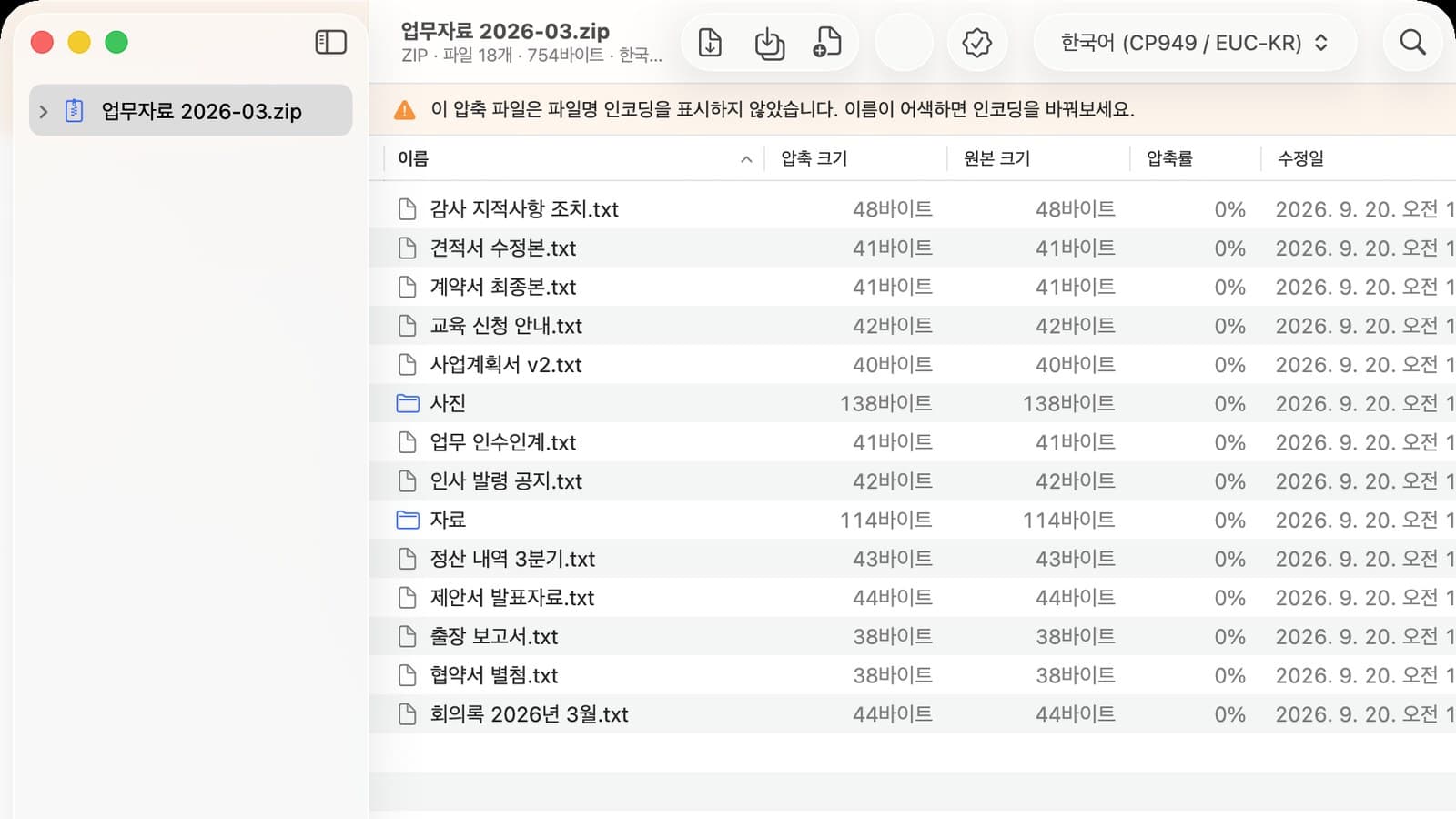
A macOS archiver that keeps filenames intact between Mac and Windows. When compressing, every name is normalized to NFC and flagged as UTF-8, so Korean, Japanese and other composed names stay readable on Windows. When extracting, archives that carry names without an encoding declaration are previewed first: jamoa guesses the legacy encoding (CP949, Shift_JIS, GB18030, Big5 and more) and lets you switch it with a live preview. It creates and opens ZIP, 7Z and the TAR family, and supports AES-256 ZIP encryption and the Finder right-click menu. Files never leave your Mac, and the only network request is the update check you ask for.
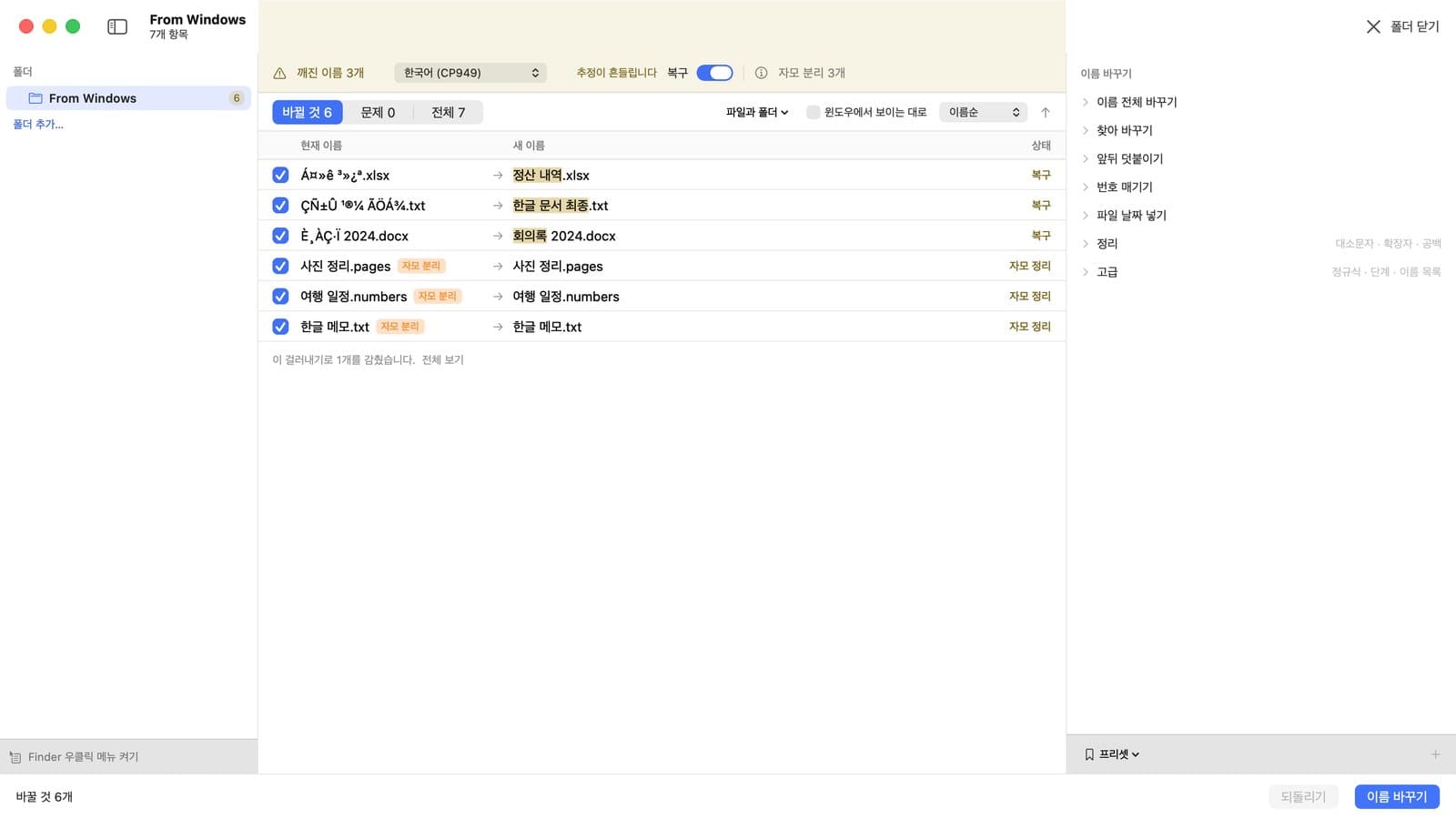
A free batch renamer for macOS and the sister app of the jamoa archiver. Names that arrived broken from Windows get their real name back: bakkumi guesses the original encoding and only touches names whose repair round-trips. Decomposed Hangul is normalized to NFC, and a "Show as Windows sees it" switch previews exactly what the other side will get. Whole-name replace, find and replace, numbering by name, date or the time a photo was taken, and extension changes all run through a preview that cannot be turned off. If even one new name would collide the rename button stays locked by default, and what you renamed in one batch you undo in one batch.