Software proven in Korea, built for the world
We are a software company from Seoul with a global ambition. Four AI-native products — a government portal platform, static code analysis, tender analysis, and open-data location analytics — were forged in one of the most demanding public-sector markets, and are engineered to run anywhere.
SOLUTIONS
Four products, built in-house
Each one solves a different domain problem. No outsourcing — our own engineers designed and built them, and they go into a project on day one.
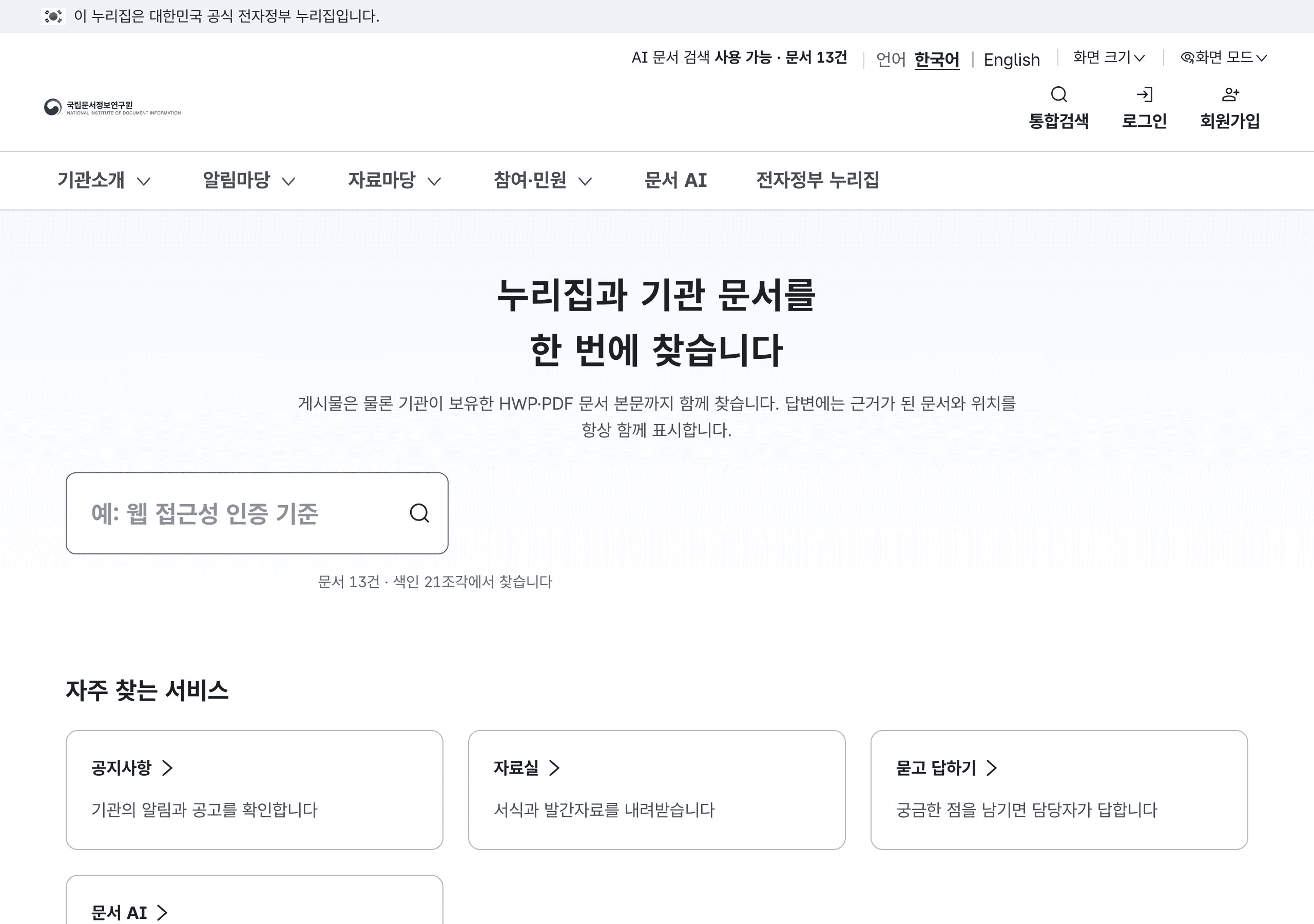
MORU
A citizen-facing portal and back office built on the Korean eGovFrame 5.0 and the KRDS design system. Accounts and roles, boards, secure attachments, a standard glossary, audit logs and batch jobs come ready-made, with seven business packs on top.
LLM drafts the answer → Source shown · staff confirms
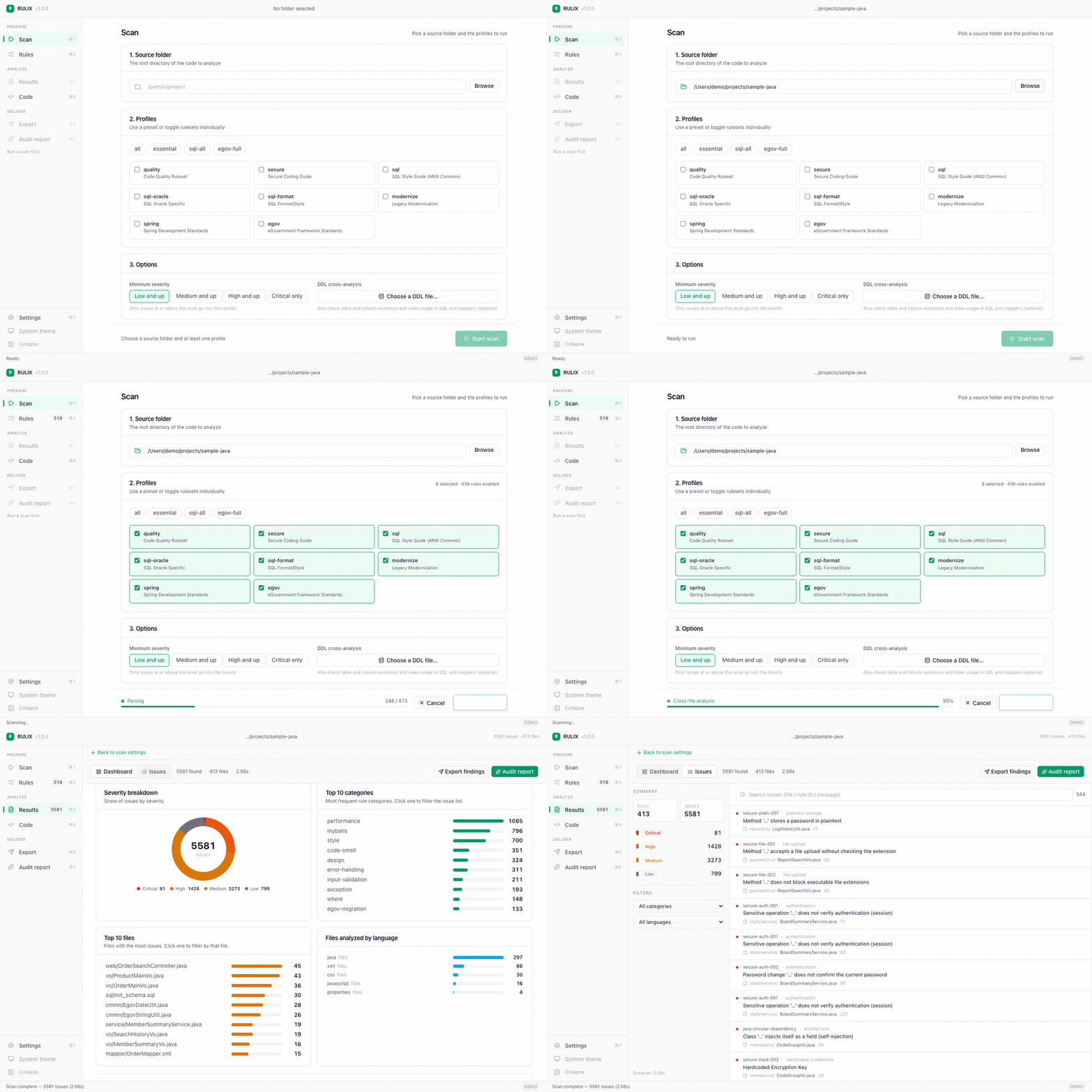
RULIX
Finds quality defects and secure-coding weaknesses across Java, JavaScript, SQL and XML with 535 rules. A single Go binary, so it runs inside air-gapped development networks with nothing to install.
AI interprets & prioritizes → Report · developer fixes
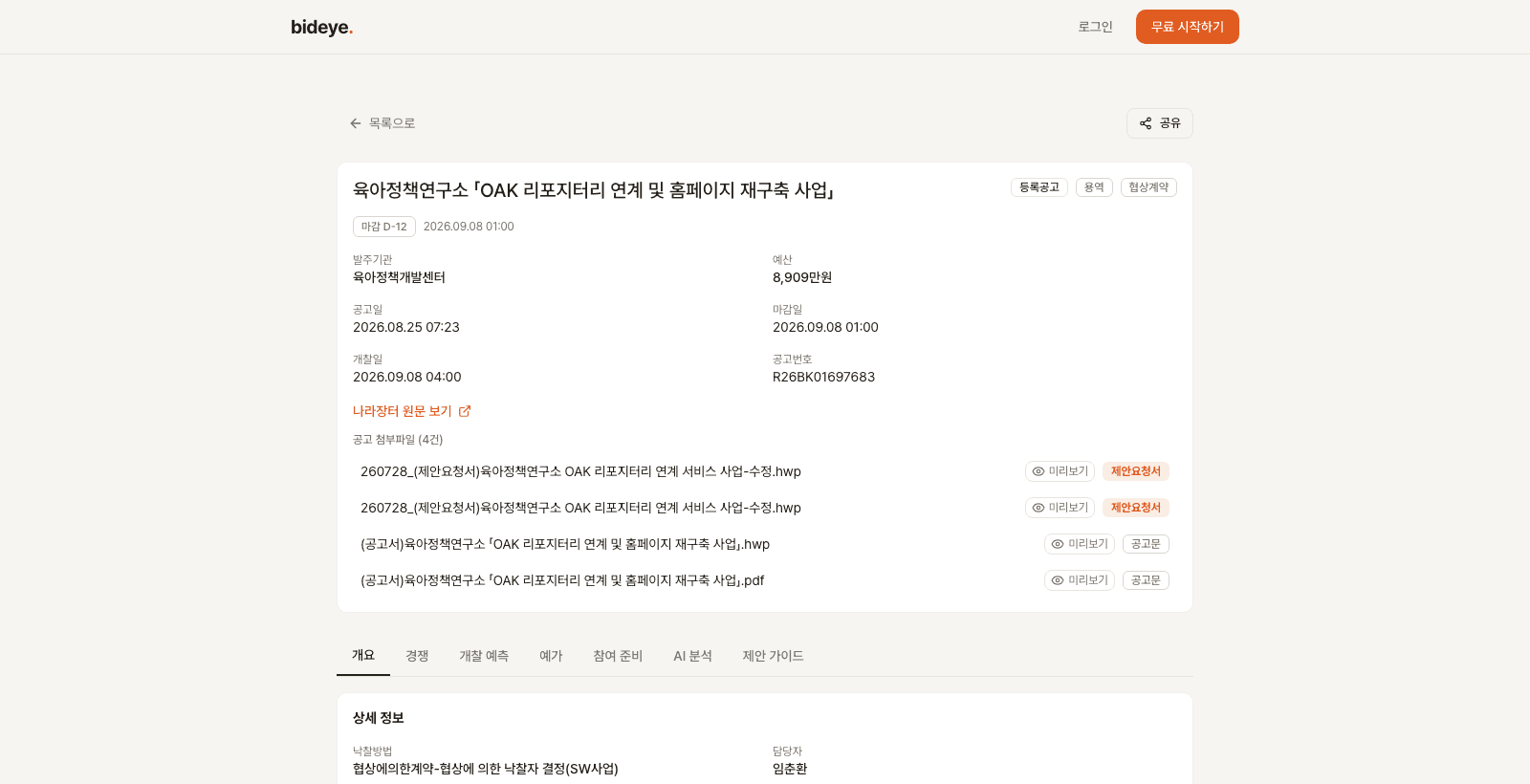
BidEye
Collects and classifies tenders from Korea's public procurement portal, matches them against a company's licenses and qualifications, and scores how well each one fits. Hours of screening hundreds of notices become minutes.
LLM summary · qualification match → Fit grade · staff decides
Salgot
Layers transaction prices, school data, crime statistics and population onto one map, then recommends the neighborhoods that best match a plain-language request, with the evidence attached. 26 regions covered.
AI converts to weights → Evidence-backed picks · user compares
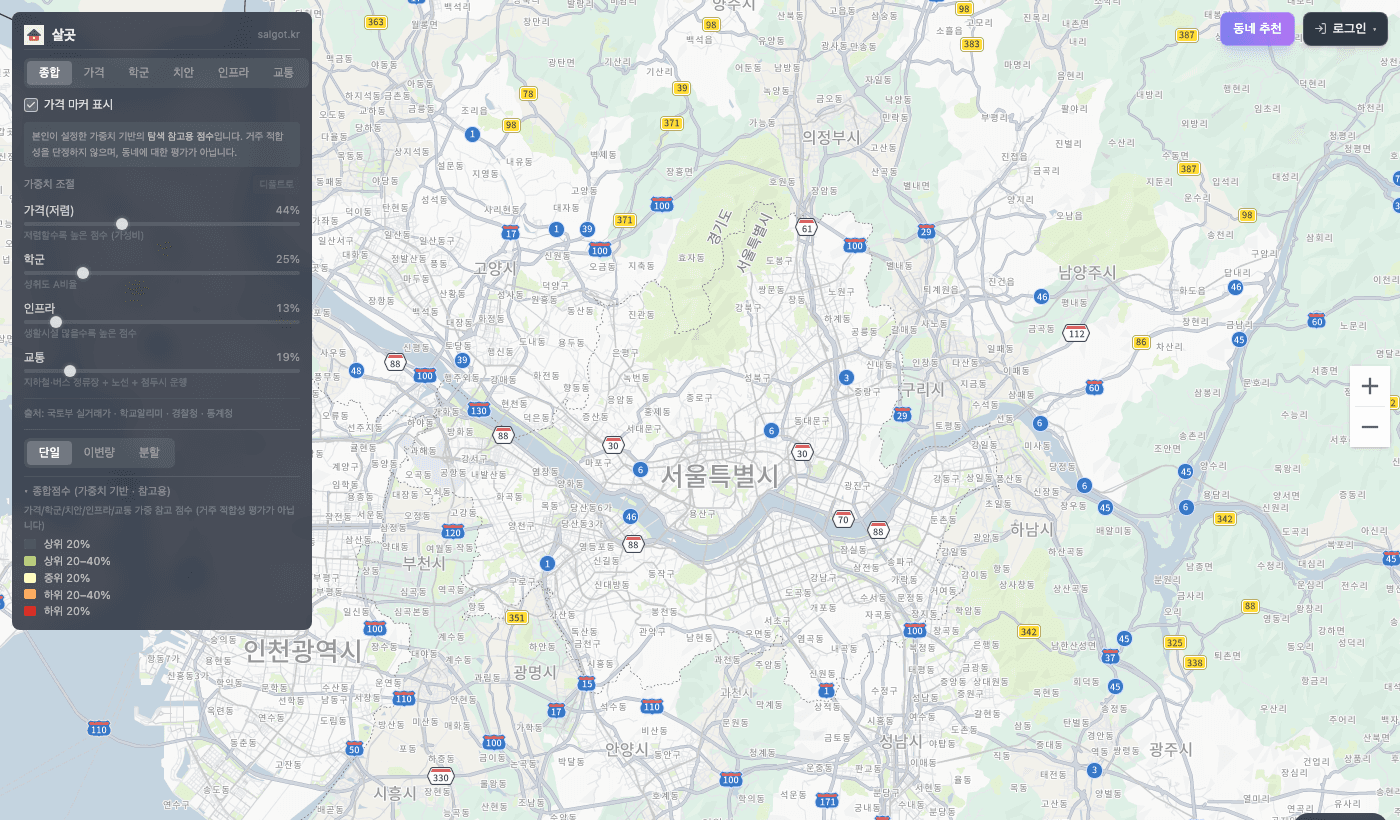
The screens above are our own assets that we develop and operate ourselves, not contract deliverables.
AI INSIDE
AI is the core engine of all four products
AI detects and judges; people approve. Repetitive cognitive work goes to the model, and responsibility for the decision stays with a person. We deploy with external APIs or on-premises models, whichever the site requires.
Public tender analysis
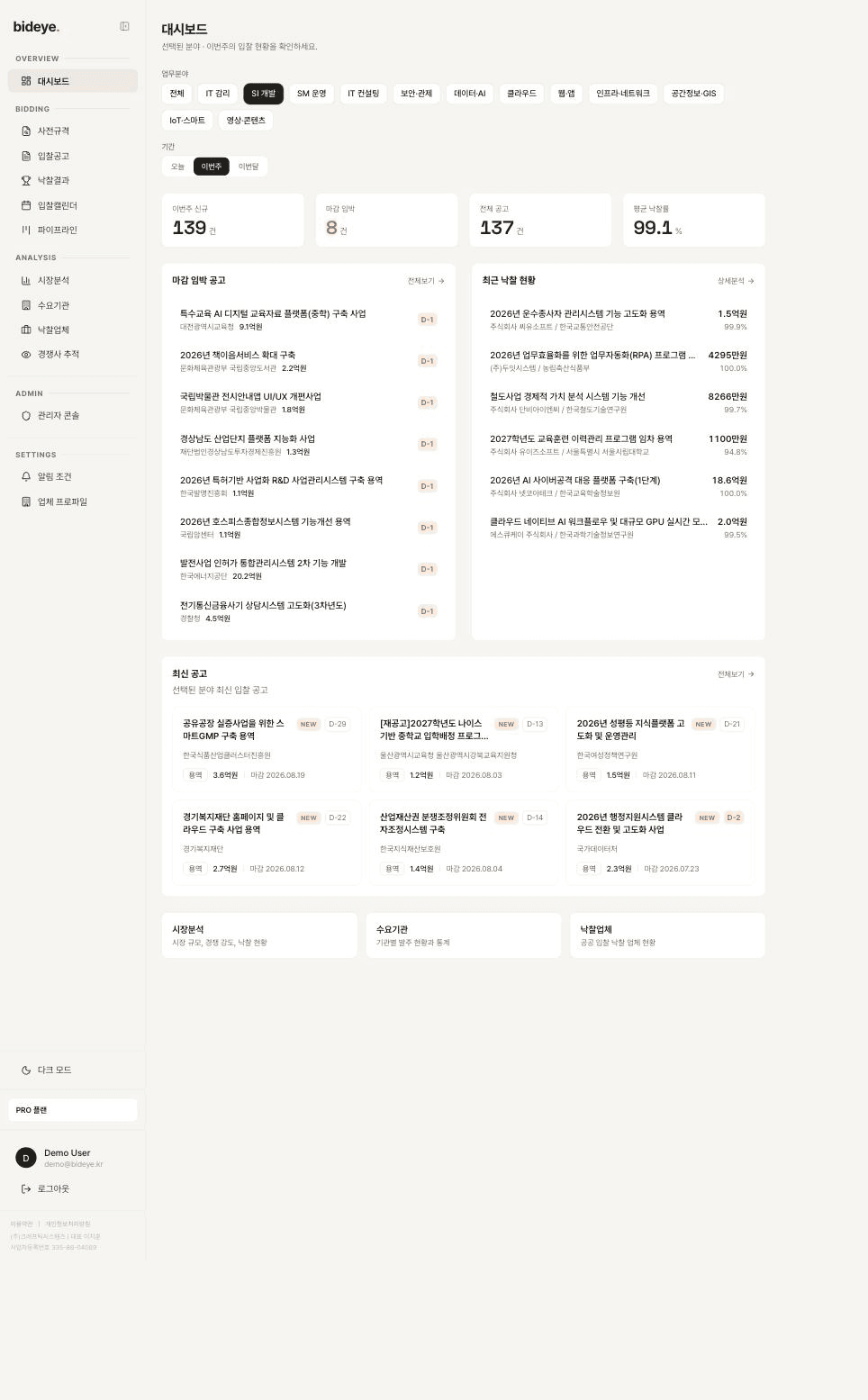
Reads each tender and decides whether you can bid
An LLM summarizes and structures every collected notice, compares it with the registered company profile, and assigns a fit score and grade. AI screens the daily inflow first; people review only what it recommends.
- 1Collect & classify tenders
- 2LLM summary · qualification matchAI
- 3Fit grade · staff decidesHuman
Location analytics on open data
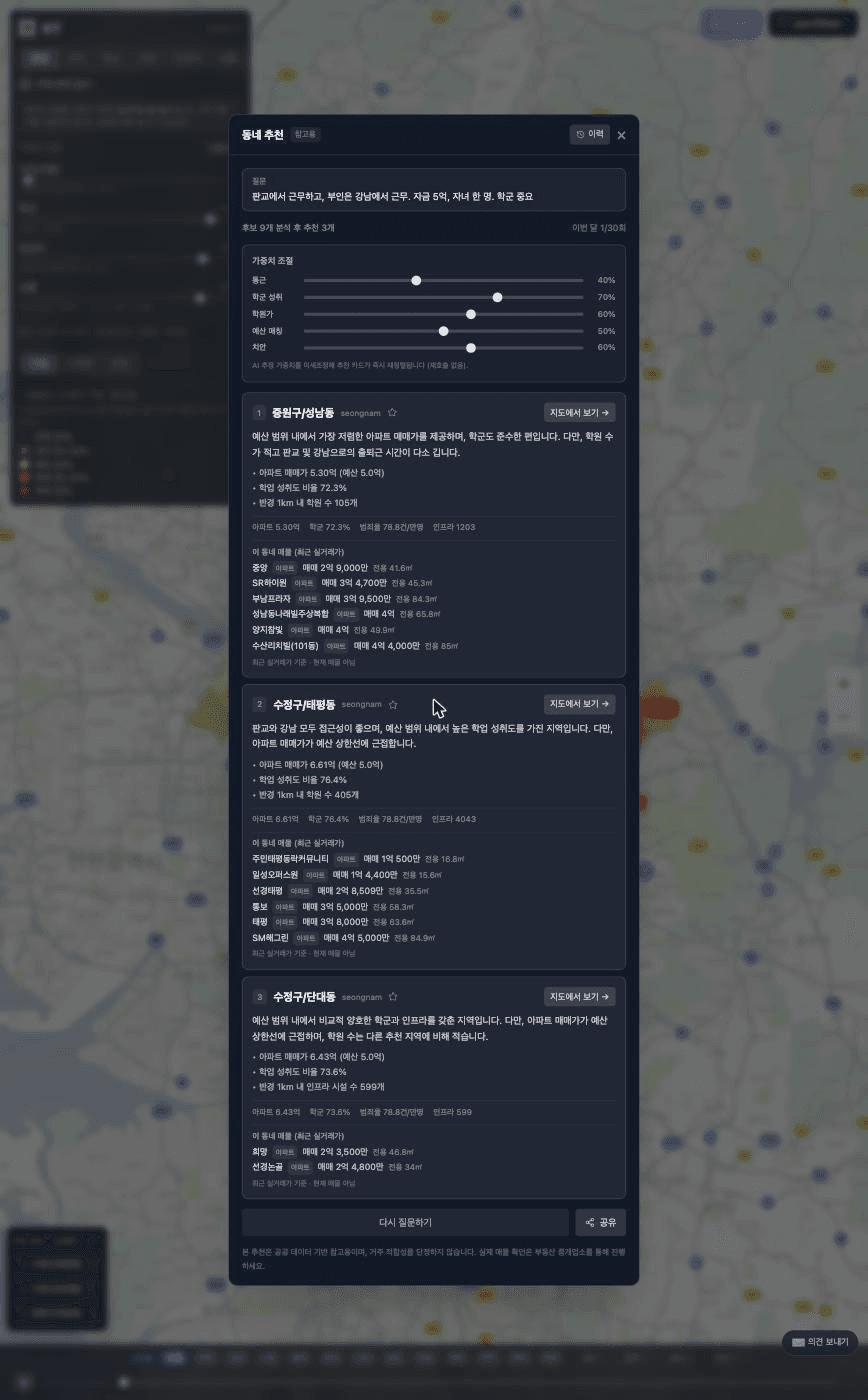
Turns one sentence into weights and recommends a neighborhood
AI converts a request like “near an elementary school and quiet” into multi-criteria weights, scores them against open-data indicators, and presents candidate districts with the supporting evidence. The final pick is made by the user, comparing on the map.
- 1Plain-language request
- 2AI converts to weightsAI
- 3Evidence-backed picks · user comparesHuman
Government portal & admin platform
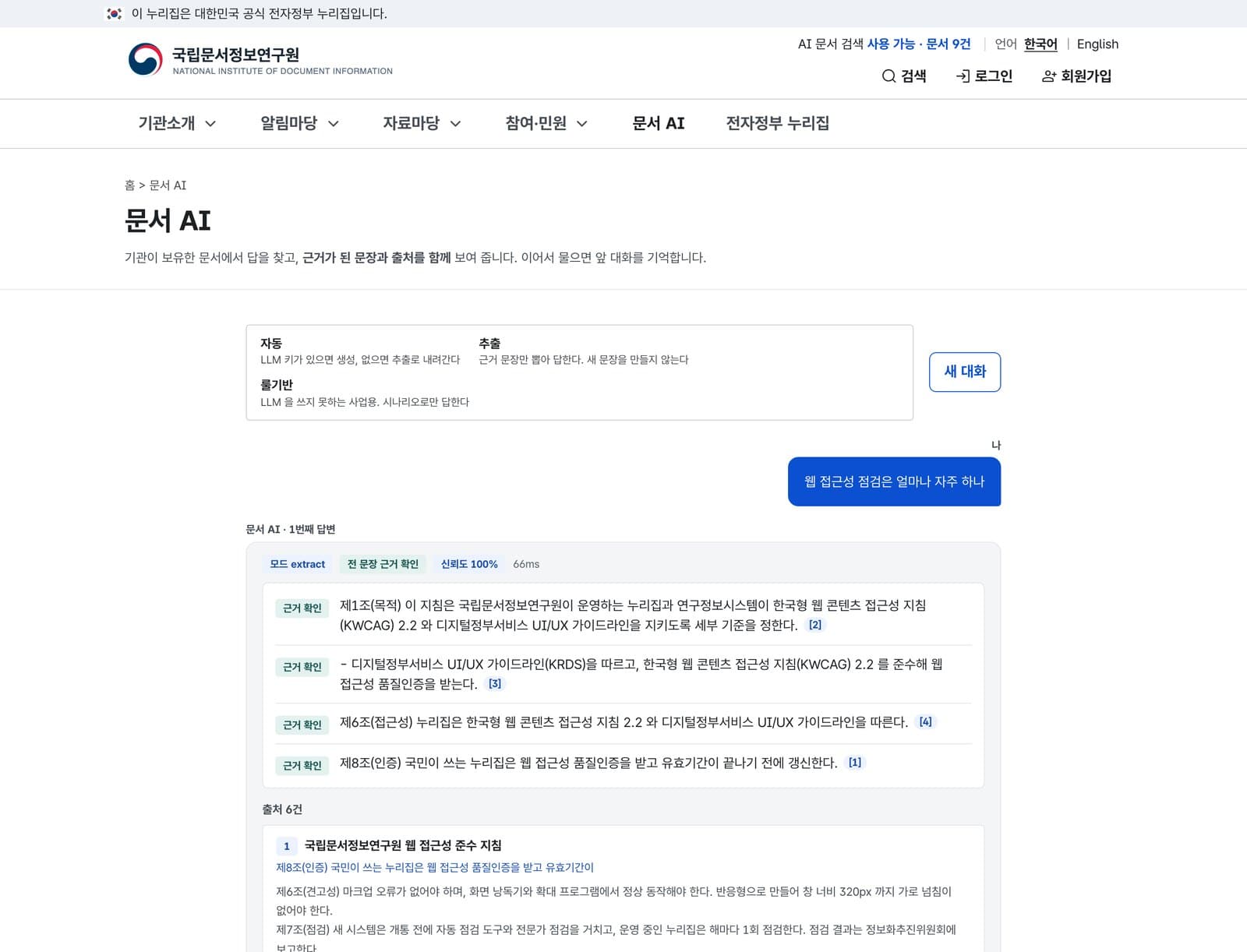
Answers about official documents, with the source shown
It indexes an agency's notices, guidelines and circulars, then answers questions while pointing to the original passage. Switch the document-AI module off and the platform still runs on its own, so the same product fits sites where AI is not yet allowed.
- 1Index & search documents
- 2LLM drafts the answerAI
- 3Source shown · staff confirmsHuman
Static analysis for code quality & security
Turns a list of findings into a diagnostic report
AI reads what the analyzer found, ranks it, and writes a report with priorities and how to fix each issue. Through MCP it plugs into AI agents so developers can call it from their own tools. In 2027 it grows into an AI code-diagnosis and consulting service.
- 1535-rule static analysis
- 2AI interprets & prioritizesAI
- 3Report · developer fixesHuman

GLOBAL
Born in Korea, built for the world
Our goal is a global software company. Korea's public sector — strict accessibility rules, air-gapped networks, formal audits — is where our products earned their first scars. Software that passes here travels well.
Proven in a demanding market
eGovFrame standards, web accessibility certification, air-gapped deployment and formal system audits are the everyday bar in Korean public IT. Every product cleared it.
Open source, in the open
We publish what others can build on: a KRDS React component library (45 components, MIT) and Argus, an API security platform with 250+ detection rules (AGPL).
AI-native from day one
Each product ships with an AI core and runs on cloud APIs or on-premises models. The same design — AI detects and judges, people approve — applies in any language or jurisdiction.
COMPANY
Seven months in, four products shipped
Founded in February 2026 by three senior engineers with equal shares. We finished and launched our products without spending on outsourced development, and secured every qualification the Korean public procurement market requires in the first year.
Built in-house
Combined founder experience
RULIX static-analysis rules
Registered software copyrights
Technical books published
Timeline
Company founded
Three senior engineers, equal shares
BidEye & Salgot launched
Web services opened to the public
Venture certification · mobile apps
Released on the App Store and Google Play
Entered public tenders
Startup certification · registered bidder on the national e-procurement system
Two software copyrights registered
C-2026-039381 · C-2026-039382
MORU v1.2 · five books
Portal platform completed, technical books published
Growth funding backed by a KIBO guarantee
Growth financing based on a technology guarantee from Korea Technology Finance Corporation (KIBO)
Registrations & certifications
- Registered software business
- Direct-production certificate
- Certified venture company
- Certified startup
- SME confirmation
- Registered public bidder
- KIBO technology guarantee
In progress
- GS certification — MORU, then RULIX (target 2027)
- CC certification — RULIX security diagnostics
- Software copyright for MORU and RULIX
Business model
- 01AI-driven public IT delivery — Our products go into a project on day one, cutting cost and schedule.
- 02Products & licensing — MORU business packs and UI components, and RULIX licenses, supplied to other integrators' projects as well.
We develop and fund the packs ourselves, ahead of the projects that use them. Deliverables and agency data remain the customer's under the contract, and nothing agency-specific goes into the product.
TEAM
The people who build it are the people who verify it
All three co-founders are senior hands-on engineers and certified lead auditors of public information systems. One team holds both the ability to build systems and the judgment that comes from assessing their quality and security. Five people work as three teams: Platform Engineering, Quality & Security, and Data & AI. Two additional engineers add UI quality and natural-language processing. AI agents are the team's tools; decisions are made by people.
Each lead wrote the book on their area
Spring AI, eGovFrame + React, secure coding and code quality, Kubernetes migration — every author owns that area in our products.
Everyone ships code
The project director writes code too. No standalone management layer: all five design, build and test.
AI is a tool, approval is human
We use AI agents for code generation, review and documentation. Every deliverable is checked by its owner before it is final.
CONTACT
Project enquiries and demo requests
Portal build-outs, source-code audits, open-data analytics. Send us the scope and we will reply with what our products let you start on right away.
- Company
- CRAFTIC SYSTEMS, Inc.주식회사 크래프틱시스템즈
- Address
- Rm 211-85, 2F, 34 Gasan digital 2-ro, Geumcheon-gu, Seoul 08592, Republic of Korea
- Registration no.
- 335-86-04089